


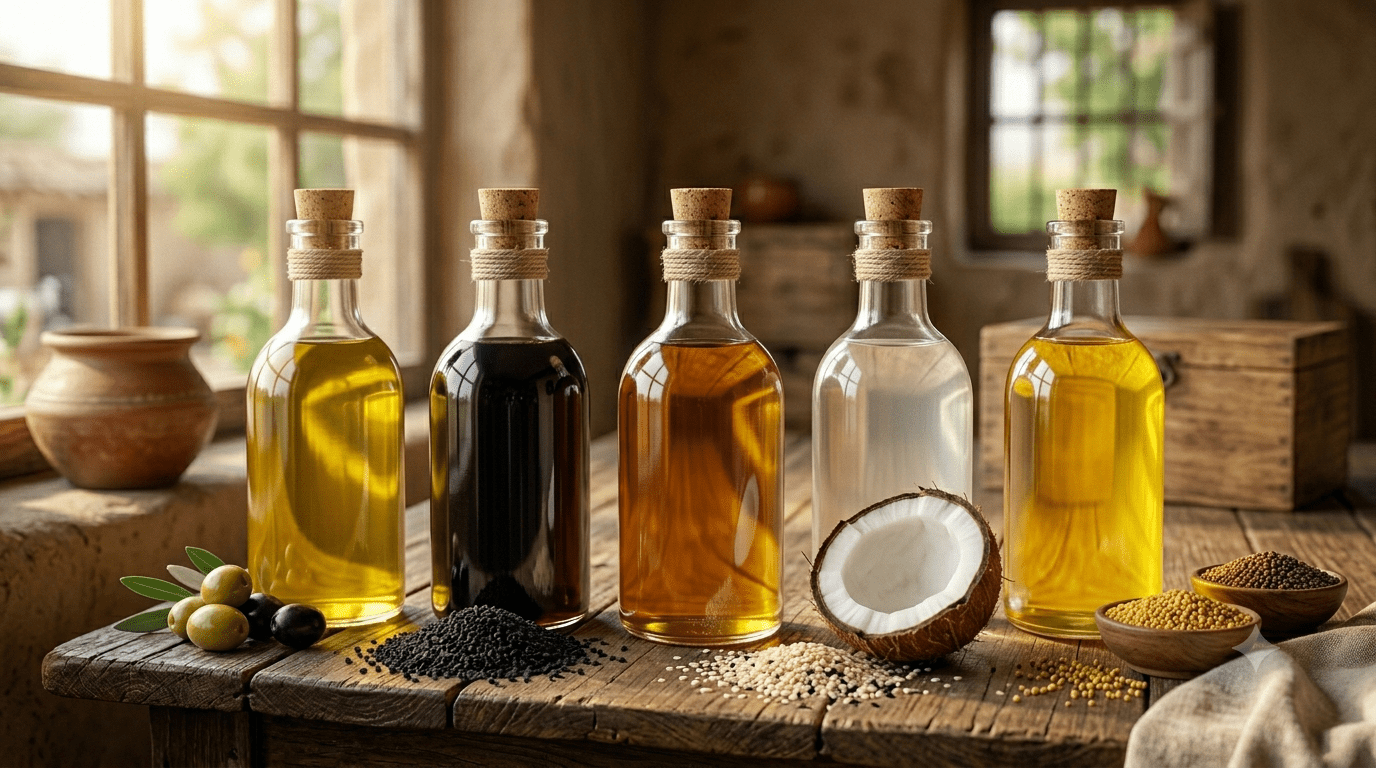
Choosing the right cooking oil is an important part of maintaining a healthy lifestyle. With increasing awareness about natural foods, many consumers are turning to cold-pressed oils as an alternative to conventional refined oils. But what exactly is the difference between cold-pressed oils and regular oils?
In this article, we’ll explore how these oils are produced, their benefits, and why many health-conscious individuals prefer cold-pressed varieties.
What Are Cold-Pressed Oils?
Cold-pressed oils are extracted from seeds, nuts, or fruits using mechanical methods without excessive heat. This process helps preserve the oil’s natural flavor, aroma, and nutritional properties.
Common cold-pressed oils include:
- Olive Oil
- Black Seed Oil
- Coconut Oil
- Mustard Oil
- Sesame Oil
- Almond Oil
Because they undergo minimal processing, cold-pressed oils retain more of their natural characteristics.
What Are Regular Refined Oils?
Refined oils are produced using high temperatures and industrial processing methods. These processes are designed to increase yield, improve shelf life, and create a neutral taste and appearance.
While refined oils are widely available and commonly used, the extensive processing may reduce some naturally occurring compounds found in the original source.
Key Differences Between Cold-Pressed and Refined Oils
1. Extraction Method
Cold-Pressed Oils:
- Extracted mechanically
- Minimal heat involved
- Less processing
Refined Oils:
- High-temperature processing
- Multiple refining stages
- Greater industrial treatment
2. Natural Flavor
Cold-pressed oils often retain the original flavor and aroma of their source ingredients.
Refined oils typically have a more neutral taste due to processing.
3. Nutritional Value
Cold-pressed oils are valued for preserving naturally occurring nutrients and beneficial compounds.
Many consumers choose them as part of a balanced and natural lifestyle.
4. Appearance
Cold-pressed oils may have a richer color and more natural appearance.
Refined oils generally appear clearer due to filtration and processing.
Popular Cold-Pressed Oils and Their Uses
Olive Oil
Often used in salads, dressings, and light cooking.
Black Seed Oil
Widely appreciated for its traditional uses and natural properties.
Coconut Oil
Popular for cooking, baking, and personal care routines.
Mustard Oil
Frequently used in traditional South Asian cooking.
Sesame Oil
Known for its rich flavor and culinary versatility.
Why Many People Prefer Cold-Pressed Oils
Consumers increasingly seek products that are closer to their natural form. Cold-pressed oils align with this preference by offering:
- Minimal processing
- Natural flavor and aroma
- Traditional extraction methods
- High-quality ingredients
Tips for Buying Quality Oils
When purchasing oils, consider the following:
- Choose reputable brands
- Check for proper packaging
- Look for clear product information
- Buy from trusted suppliers
- Store oils away from direct sunlight
Conclusion
Both cold-pressed and refined oils have their place in modern kitchens, but many consumers appreciate cold-pressed oils for their natural qualities and traditional production methods.
By understanding the differences between these options, you can make informed choices that align with your preferences and lifestyle.
At Qudrati Foods, we are committed to offering carefully selected natural products, including premium-quality oils that support a wholesome and authentic food experience.